Live Rock, Dead Rock and Synthetic Rock in the Marine Aquarium
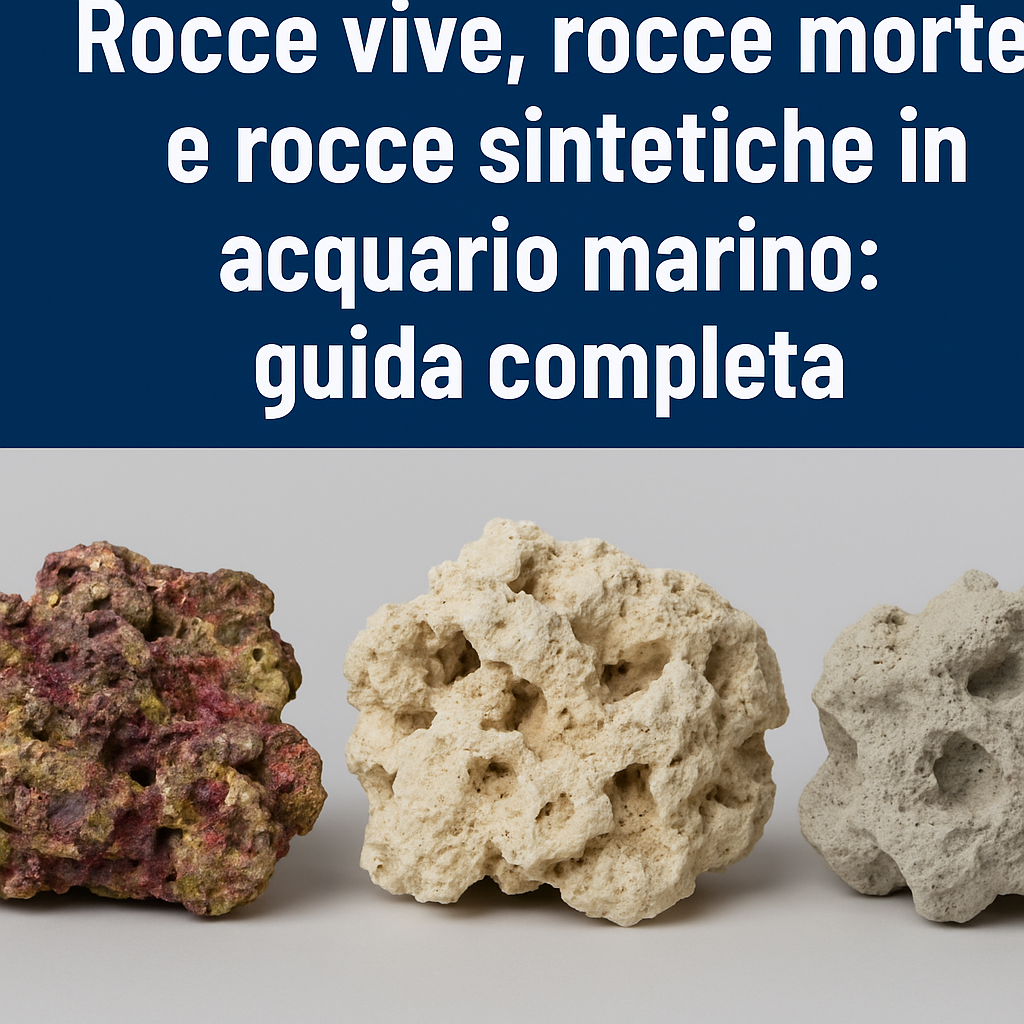 Immagine generata con intelligenza artificiale
 Everything You Need to Know
Introduction
In the modern marine aquarium, the choice of rock represents one of the decisions with the greatest influence on the biological balance, on the aesthetics of the layout and on the long-term health of the aquatic ecosystem. Rocks are not only decorative elements: they act as a biological filter, a base for bacterial colonisation, a support for corals and invertebrates, and they play a key role in the dynamics of the nitrogen cycle.
This article explores in depth live, dead and synthetic rock, analysing their advantages, disadvantages, ecological impacts and performance in the main systems (Berlin, Triton, Zeovit, ULNS, etc.). A detailed comparison, accompanied by comparative tables, graphs and technical boxes, offers a complete guide for every aquarist, from the advanced newcomer to the professional.
1. What are live, dead and synthetic rocks?
Live rock
Coming from natural reefs, it contains microfauna, bacteria and in some cases algae and small symbiont organisms. It is ready for use and accelerates the maturation of the system.
Dead (or dry) rock
Rock originally live, subsequently dried and cleaned. Without active life but with a porous structure useful for future bacterial colonisation.
Synthetic rock
Produced artificially with materials such as ceramic, marine cement or compacted sand. The best-known brands are Real Reef, Aquaforest Rock Mix, MarcoRocks, CaribSea LifeRock.
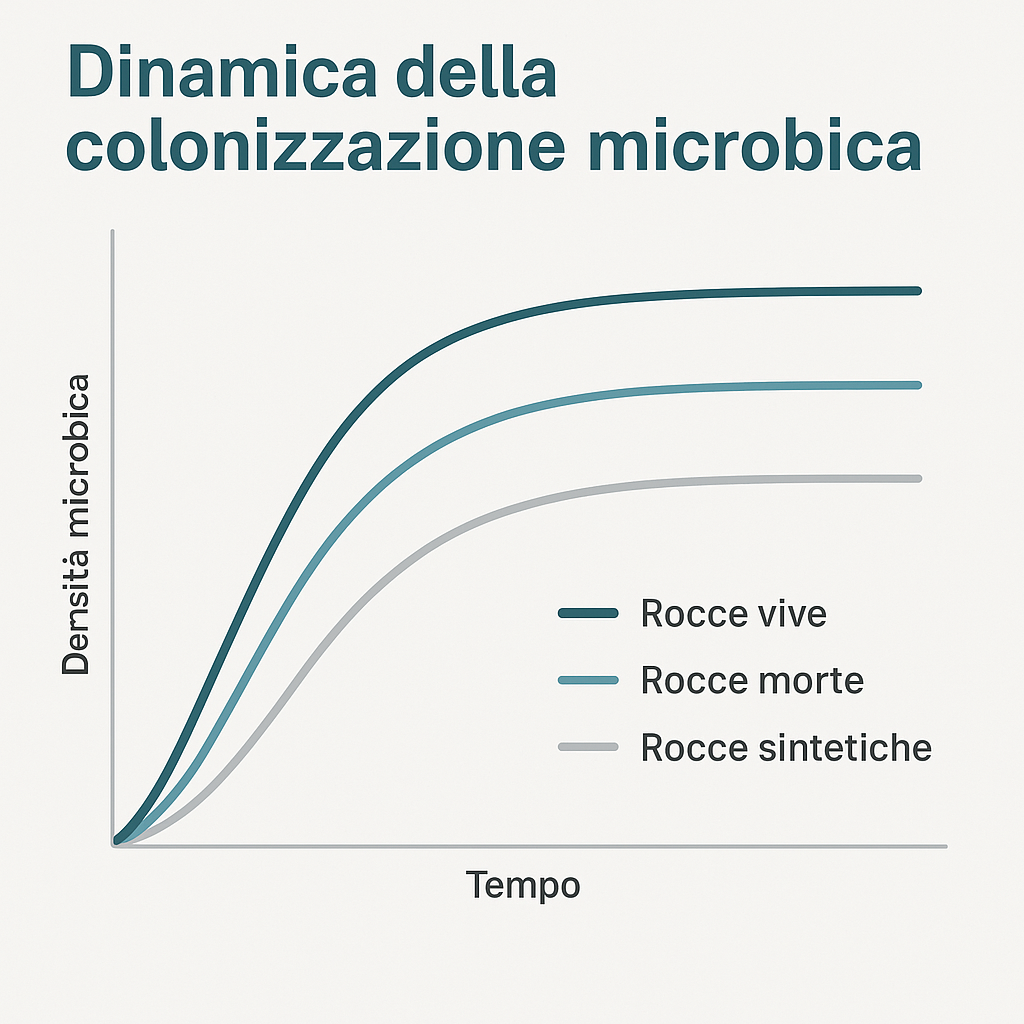
2. Biological function: nitrogen cycle and bacterial colonisation
| Type of rock | Nitrifying bacteria | Denitrifying bacteria | Initial microfauna | Maturation time |
|---|---|---|---|---|
| Live rock | ✓✓✓ | ✓✓ | ✓✓✓ | Low |
| Dead rock | ✓ (after colonisation) | ✓ (slow) | Absent | Medium |
| Synthetic rock | ✓ (if well designed) | Variable | Absent | Medium-long |
Graph: dynamics of microbial colonisation
3. Aesthetic aspects and aquascaping
| Characteristic | Live rock | Dead rock | Synthetic rock |
| Natural shapes | ✓✓✓ | ✓✓ | ✓ (replica) |
| Initial colour | Variegated | Whitish | Coloured |
| Customisation | Limited | High (with cement/shaping) | Very high |
| Structural stability | Medium | High | High |
Technical box:
Advanced aquascaping? Synthetic or cemented dead rock (e.g. StoneFix) allows suspended structures, arches and stable towers.
4. Reference systems and performance of the rocks
Berlin system
- Prefers live or dead rock with high porosity
- The rocks act as the main biological filter
Triton system
- Requires rock with a high bacterial surface
- Synthetic rock designed for high flow in the sump is excellent
Zeovit method
- Works well with dead/synthetic rock in that it is easily controllable and free of initial nutrients
ULNS systems
- They require extremely controlled rock: dead or synthetic is ideal
- Less biodiversity = less risk of initial organic nutrients
5. Ecological analysis
| Factor | Live rock | Dead rock | Synthetic rock |
| Environmental impact | High (extraction from reefs) | Medium | Low |
| Initial biodiversity | High | None | None |
| Possible contaminations | Moderate | Minimal | Minimal |
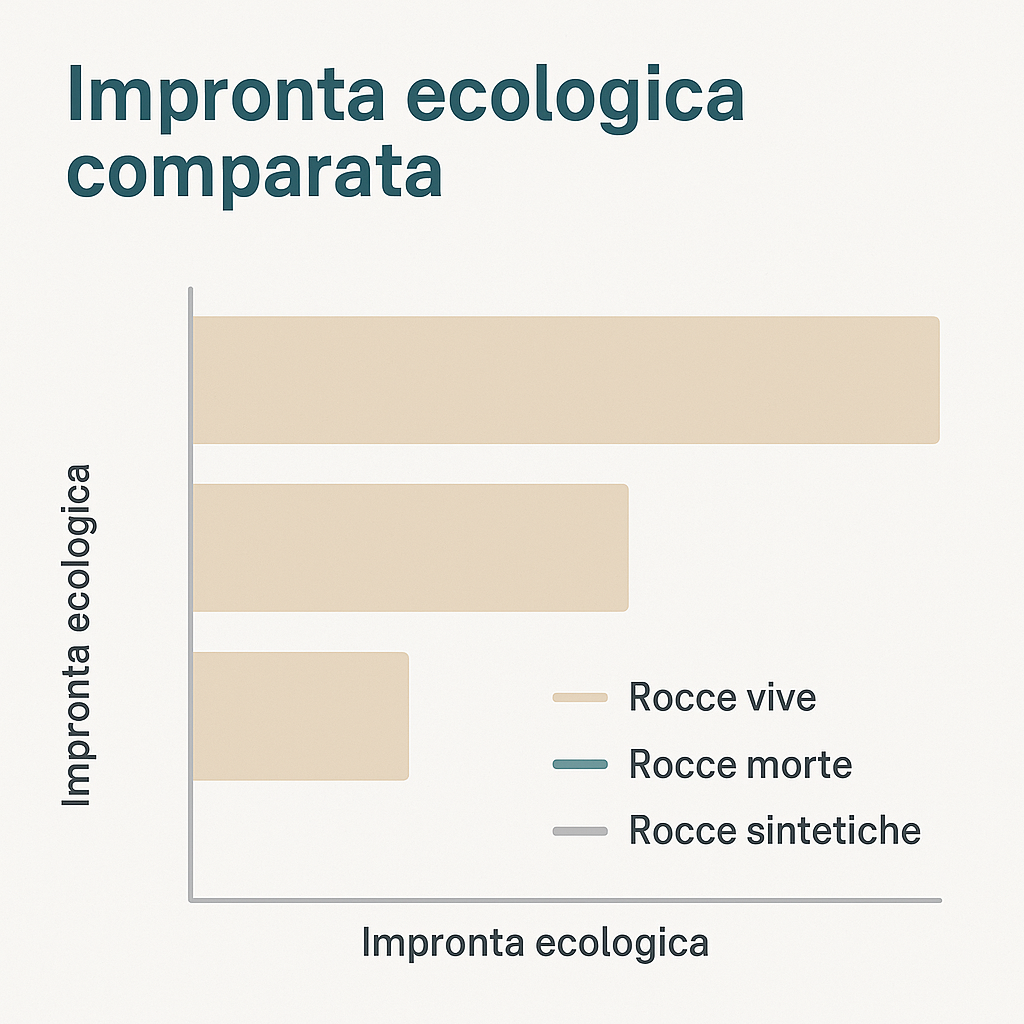
Graph: comparative ecological footprint
6. Hidden risks and benefits
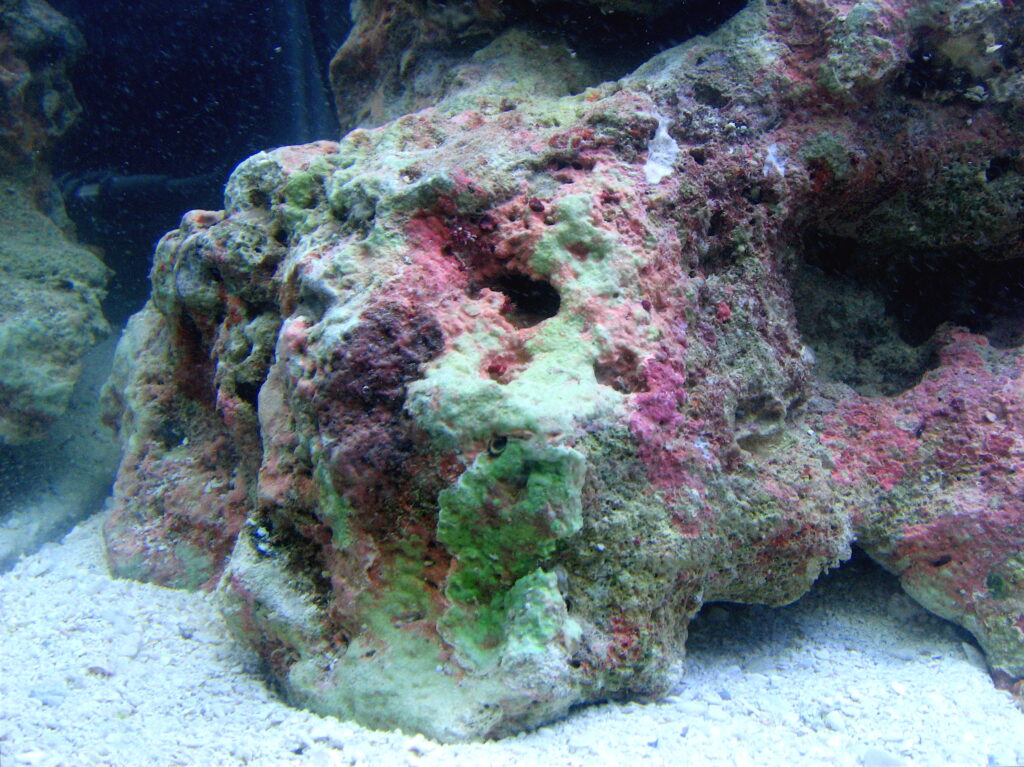
Live rock
+ Biodiversity, bacteria, immediately “natural” aesthetics − Risk of introducing parasites (aiptasia, worms, dinoflagellates)
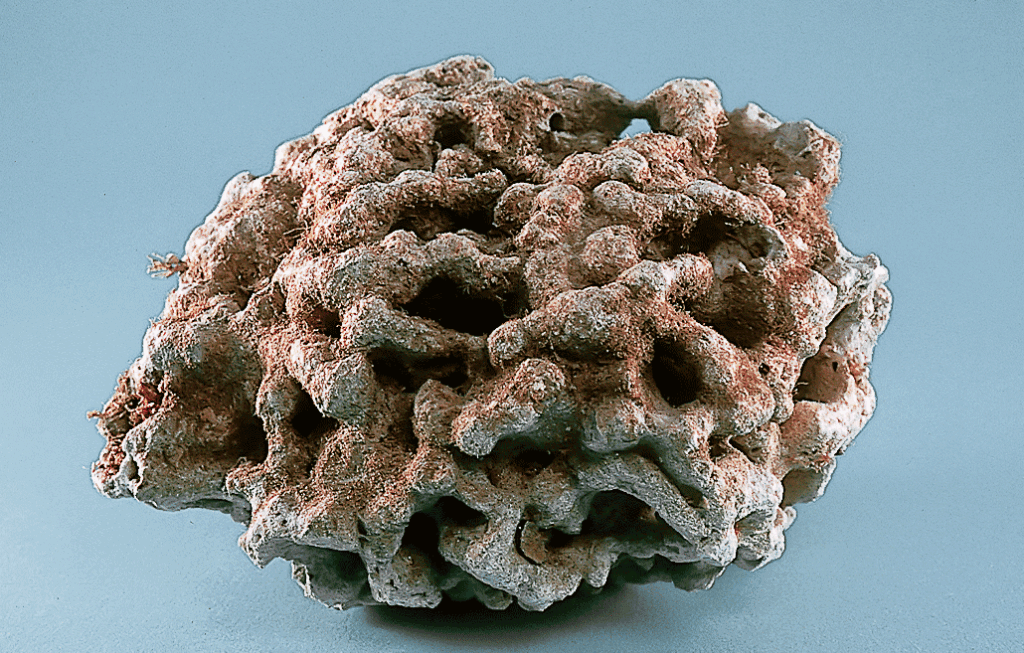
Dead rock
+ Inexpensive, versatile, zero parasites − They need long maturation and a bacterial inoculum
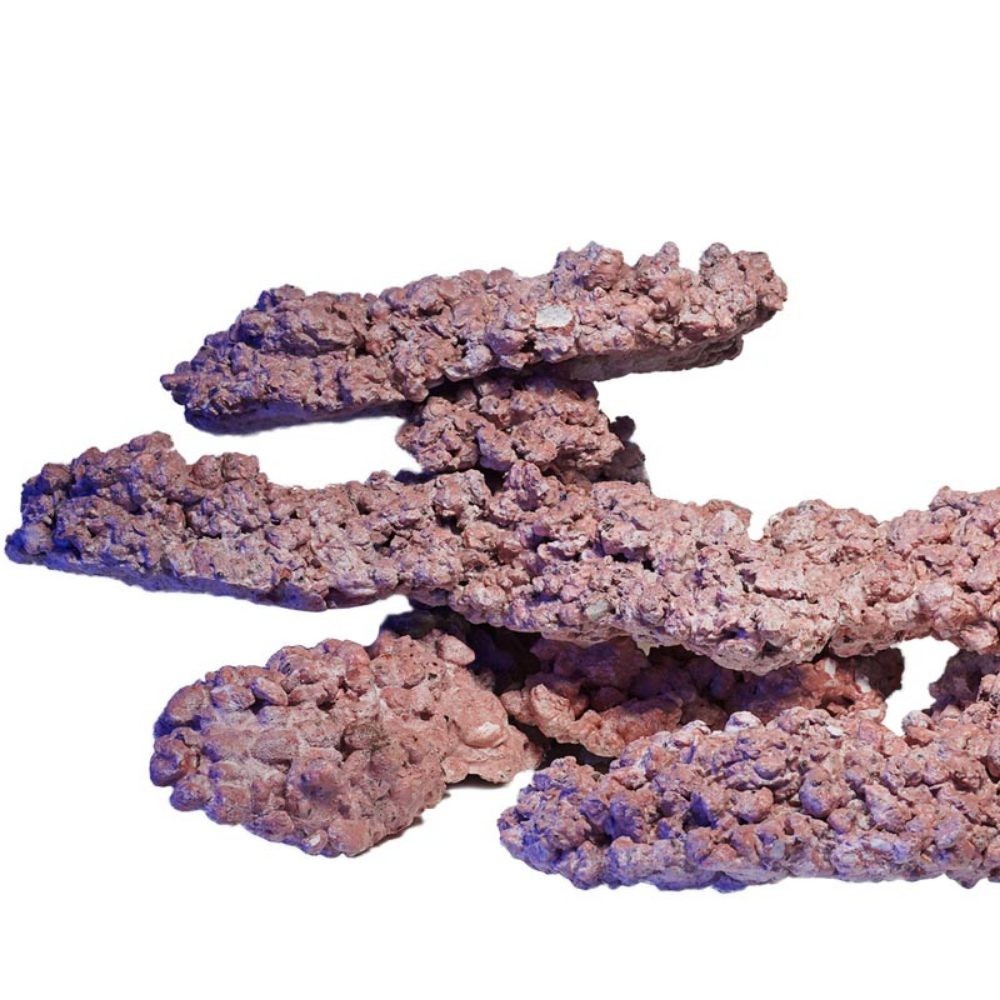
Synthetic rock
+ Ethical, clean, designable, stable − Not always porous, they require time to become “live”
7. Economic comparison
| Type of rock | Initial cost (€/kg) | Accessory expenses | Lifespan |
| Live rock | 15–25 € | Quarantine, refrigerated transport | Very long |
| Dead rock | 6–12 € | Possible StoneFix, bacterial inoculum | Very long |
| Synthetic rock | 12–20 € | None | Very long |
Note: on average 10–15% of the net volume of the tank in weight of rock is needed (e.g. 30–45 kg for a 300 L tank).
8. Integration with modern materials and techniques
- Starter bacteria: e.g. Microbacter Start, AF Bio S
- StoneFix or Reef Cement: for complex structures
- Magnetic frag racks: they fix better on synthetic rock
- Additional biomedia (e.g. MarinePure): useful if few rocks are used
9. Case study: 3 practical examples
1. 400 L SPS tank with Zeovit
- Cemented dead rock + bacteria + live sand
- Controlled start-up, explosive growth
2. 300 L mixed tank with Triton
- Synthetic Real Reef rock + sump with siporax
- Perfect stability, absence of algae
3. Classic 200 L LPS tank
- Live rock from an aquarist who has given up
- Rapid growth, but arrival of flatworms and filamentous algae
10. Conclusions
There is no single, ideal choice: every type of rock has a context in which it shines. Live rock offers biodiversity and a rapid start-up but with a risk of pests and a high environmental impact. Dead rock is versatile, inexpensive and requires patience. Synthetic rock is the most ethical and designable choice, ideal for advanced aquascaping and controlled systems.
The choice must take account of:
- Type of tank
- Methodology adopted
- Level of experience
- Initial budget
- Ethics and environmental sensitivity
Glossary
- Live rock: biologically active rock, taken from natural reefs or from other aquariums
- Dead rock: dried rock, without life
- Synthetic rock: artificial material that simulates rock
- Nitrogen cycle: biochemical process of transformation of nitrogen into less toxic forms
- Aquascaping: technique of aesthetic and structural design of the rockwork
Information boxes
🌍 Environmental ethics Avoid live rock if you do not have a guarantee that it comes from sustainable sources or cultivated reefs.
🔍 Accelerated colonisation Inoculate liquid bacteria and use a small piece of quarantined live rock to speed up colonisation.
🤝 Intelligent mix Using a base of synthetic/dead rock + a few pieces of quarantined live rock = the optimal compromise.
FAQ
🤔 Is live rock better? Not always. It is excellent for rapid start-ups but it involves risks and environmental impacts.
🪸 Can I mix different types of rock? Yes. Indeed, it is often advisable in order to optimise biological yield, aesthetics and stability.
🪰 How do I avoid the appearance of aiptasia? Use quarantined or synthetic rock. Inspect every piece carefully.
🌿 Can I use only synthetic rock? Yes, but it must be inoculated with bacteria and left to mature adequately.
Share questo articolo:
Text reviewed by a human editor before publication. Editor responsible: Francesco Avezzano, a journalist registered with the Order of Journalists of Campania. How I use artificial intelligence