Dinoflagellates in the Aquarium: How to Recognise Them, Why They Appear and How to Manage Them
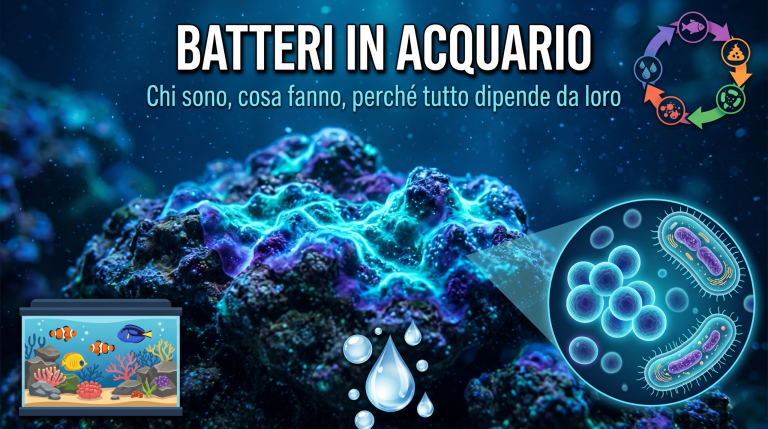
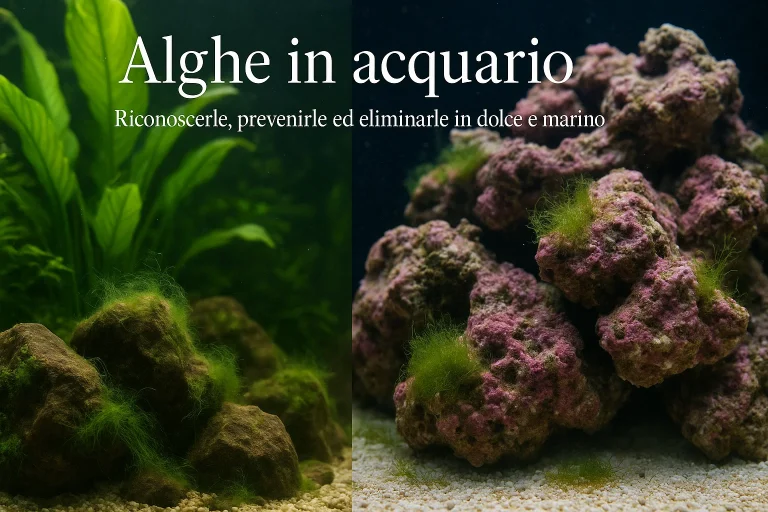
 Immagine generata con intelligenza artificiale
 There is a precise moment in which a marine aquarium stops seeming a garden and begins to seem a problem. It is when that brown, gelatinous film full of little bubbles appears, which by day smothers the corals and by night disappears as if it had never existed. Dinoflagellates are extremely ancient organisms, almost all microscopic, some dangerous even for those who handle them, and they prosper precisely in the cleanest and best-tended tanks. This manual explains what they are, how to distinguish them from diatoms and cyanobacteria, why they arrive and above all how to remove them without destroying the tank in the attempt.
What dinoflagellates are
Dinoflagellates are unicellular organisms, that is made of a single cell, belonging to the large group of the Alveolata, the same one that includes the ciliates and parasites such as the malaria plasmodium. They are neither true algae nor animals, they are protists, a separate category that stands in the middle of everything. They have existed for over 400 million years, they populate every sea of the planet and in the aquarium they represent one of the most stubborn infestations of all.
The name refers to the rotating movement with which they move in the water. That movement is born from two flagella, that is two mobile filaments. One is wrapped transversally around the cell, inside a groove called cingulum, and makes it rotate like a spinning top. The other points backwards, inside a groove called sulcus, and pushes it forwards. This combination gives dinoflagellates a mobility that diatoms and cyanobacteria do not have, and it is one of the keys to understanding why certain methods work on some genera and fail on others.
Another decisive characteristic is the cell wall. Many dinoflagellates are thecate, that is covered by an armour made of cellulose plates interlocked like the pieces of a suit of armour. This structure is called theca. Other genera lack it and remain softer. The armour changes everything in terms of physical resistance and of identification under the microscope, because the shape and the number of the plates are often the only way to distinguish one species from another.
Then there is the aspect that makes these organisms particularly devious in the tank. They are mixotrophic. It means that they do not live only on photosynthesis like a plant, but they also know how to feed as predators, absorbing dissolved organic substances or engulfing bacteria and microparticles. A filamentous alga you starve by taking away its light and nutrients. A mixotrophic dinoflagellate, when you take away its nutrients, simply changes diet. This is why starving the tank, which is the instinct of almost everyone, often makes things worse instead of solving them.


Zooxanthellae, the dinoflagellates that keep corals alive
Before treating them all as enemies it is worth stopping a moment, because a part of the world of dinoflagellates lives inside our corals and without it the coral reef would not exist. Zooxanthellae are symbiont dinoflagellates of the family Symbiodiniaceae, hosted in the tissues of corals, giant clams and many other invertebrates. They carry out photosynthesis and hand over to the host most of the sugar they produce, in exchange for shelter and nutrients. When a coral bleaches, the phenomenon of bleaching, it is because it has expelled precisely these zooxanthellae under stress from heat or excessive light.
Until a few years ago they were all gathered in the genus Symbiodinium, then genetics revealed an enormous diversity and today the family includes several distinct genera, among them Symbiodinium, Cladocopium, Durusdinium and Breviolum. Some are more resistant to heat than others, and it is one of the most interesting strands of research on the future of corals in a sea that is warming.
The world of dinoflagellates also goes beyond the aquarium. It is they who are responsible for the red tides, the massive blooms that colour the sea and can poison fish and molluscs. It is again they who produce the bioluminescence of certain tropical bays, where the water lights up blue at the passage of a hand, thanks to genera such as Noctiluca. The same biological family, therefore, produces both the indispensable partner of corals and the scourge that plagues our tanks. Understanding this dual nature helps not to be seized by panic and to reason by genera, not by categories.

How to recognise dinoflagellates in the tank
The first signal is almost always visual. Tufts or films appear, of a colour that goes from light brown to golden brown, with a consistency between mucus and cobweb. The most typical signature are the bubbles. Photosynthesis releases oxygen that remains trapped in the film, and this gives those filaments the fizzy and foamy appearance that no other infestation replicates in the same way. Often they stretch out into strings that sway with the current and attach themselves to rocks, sand, glass, pipes and even to the corals.
The second signal is the rhythm. Dinoflagellates follow the cycle of the light in an evident way. By day they explode, by night many genera withdraw into the substrate or dissolve, so much so that in the morning the tank may seem clean and then cover itself again within a few hours of the lights coming on. This alternation is one of the most reliable clues.
That said, I will be honest on a point that marketing tends to skip. To the naked eye absolute certainty does not exist. A brown film may be dinos, diatoms or a mixture, and some genera hide in the sand seeming simply dirty substrate. The only instrument that gives a true answer is the microscope. An inexpensive model at 400 magnifications is enough to see the cells move, rotate and swim, something that diatoms and cyanobacteria do not do. Whoever tackles dinos seriously, sooner or later, buys a microscope. It is not a whim, it is the difference between treating the tank and guessing for months.

The genera of dinoflagellates that we find in aquariums
In the sea there exist thousands of species of dinoflagellates, but those that really torment marine tanks are concentrated in a handful of genera. Knowing them one by one is not academic pedantry: every genus has a habitat, a toxicity and a response to treatments that is different, and getting the identification wrong means getting the cure wrong.
Ostreopsis
It is the most feared and, in many senses, the most dangerous. Ostreopsis forms relatively large cells, often between 30 and 60 µm, oval or drop-shaped, which build tenacious mucilaginous mats on rocks and hard substrates. The best-known species in the Mediterranean area are Ostreopsis ovata and Ostreopsis siamensis.
What makes Ostreopsis a serious problem is not only the invasiveness, it is the chemistry. It produces analogues of palytoxin, one of the most toxic non-protein substances known, together with a family of similar compounds called ovatoxins. They are the same toxins studied along the Ligurian and Tuscan coasts in relation to the phenomena of marine bloom. In the tank a mat of Ostreopsis can stress and kill corals and invertebrates, and it is the genus for which it is worth adopting handling precautions, as we shall see in the section on risks. The good news is that many cells end up in the water column, so Ostreopsis responds well to the UV steriliser, that is to the ultraviolet rays that destroy the cells passing through.

Amphidinium
Amphidinium is the patient enemy. Small and fast cells, lacking a rigid armour, which live above all inside and on top of the sand, where they form thin films and move rapidly. In aquarium jargon one often speaks of large cell amphidinium to indicate the larger and more stubborn forms.
The real problem of Amphidinium is twofold. First, it is benthic, that is it lives resting on the bottom, so a large part of the cells never passes into the water column and escapes the UV. Second, it produces cysts, forms of resistance that survive in the substrate and start again when you think you have won. For this reason blackout and UV on their own often are not enough against this genus, among the most difficult to eradicate of all. Its acute toxicity is considered lower than that of Ostreopsis, but the capacity to smother the microfauna of the sand and to impoverish the tank makes it a serious adversary all the same.

Prorocentrum
Prorocentrum is the genus that often is not even recognised as a dinoflagellate, because at the beginning it seems simple brown dust on the substrate. It is an armoured dinoflagellate, with a clearly visible theca, and some species such as Prorocentrum lima produce okadaic acid, the toxin responsible in the natural environment for the so-called DSP, diarrhetic shellfish poisoning.
In the tank it forms patches and films that are more powdery than gelatinous, but it must not be underestimated: it smothers the corals, competes for resources and its toxicity is real. The positive side is that a part of the cells is planktonic, so it passes through the filtration systems and can be attacked by UV and by good mechanical filtration. In a tank with an active refugium or a healthy plankton community, some microorganisms can also contribute to keeping it under control. Among the demanding genera, it is often the most manageable.

Coolia
Coolia, in particular Coolia monotis, shares habitat and appearance with Ostreopsis, forming mats on hard surfaces, and often the two genera coexist in the same bloom. It produces a toxin of its own, cooliatoxin, considered less potent than palytoxin but harmful all the same. It is generally less aggressive than Ostreopsis and tends to form more localised colonies, preferring the areas in shade. In practice, if you have Ostreopsis, check whether there is not also Coolia mixed in, because the removal strategy is similar but must be applied to the whole infestation.

Gambierdiscus
Gambierdiscus is more a protagonist of the open sea than of our tanks, but it deserves a place in this list because it is the genus linked to ciguatera, food poisoning from tropical fish. It produces ciguatoxins and maitotoxins, among the most potent marine toxins known, which accumulate along the food chain up to predatory fish. In the aquarium it is rare as a pure infestation, and its importance is above all sanitary and scientific: remembering that inside this group of organisms there exist molecules that are not to be joked with helps to handle rocks and mats with the respect they deserve.

Dinophysis and other less frequent genera
Dinophysis appears rarely in tanks because it is predominantly planktonic, that is it lives suspended in water rather than resting on surfaces, but it too produces okadaic acid and related compounds responsible for DSP. Alongside these main genera others are occasionally encountered, and the real picture of a tank is often a mixture of several organisms that coexist. This is another reason why rigid recipe-like protocols work only halfway: every infestation has its own combination, and the strategy must be adapted to what is seen under the microscope, not to what worked in somebody else’s tank.
Dinoflagellates, diatoms or cyanobacteria, how not to get confused
Half the battles lost against dinos are born from a recognition error. The three most common brown films resemble one another from a distance but require different strategies. Diatoms are unicellular algae inside a siliceous shell, typical of new tanks, they form an opaque brown dust on glass and substrate, they do not make conspicuous bubbles and they do not move. Often they disappear on their own when the tank matures, and moreover they are our allies against the dinos, as we shall see. Cyanobacteria, often called red algae or cyano, are not algae but photosynthetic bacteria, and they form compact films of a colour that goes from red to burgundy to dark green, with a milky and slimy texture that detaches in sheets. They too can trap a few bubbles, which is confusing, but consistency and colour are different.
Dinoflagellates stand in the middle, with that golden brown, filamentous, mucilaginous appearance rich in bubbles, the marked day and night rhythm and, under the microscope, the active movement which is the definitive proof. The following table summarises the practical differences.
| Characteristic | Dinoflagellates | Diatoms | Cyanobacteria |
|---|---|---|---|
| Nature | unicellular protists | algae with siliceous shell | photosynthetic bacteria |
| Colour | golden brown | opaque brown | red, burgundy or dark green |
| Consistency | mucous, filamentous | powdery | slimy film in sheets |
| Oxygen bubbles | abundant and typical | absent | scarce |
| Movement under the microscope | active, rotating | absent | absent |
| Day and night cycle | very marked | little marked | marked |
| Favourable nutrients | very low | maturation phase | often high |
| Toxic risk | high in some genera | absent | low, some toxins |
Why dinoflagellates appear
Here the most deeply rooted prejudice of the aquarium world must be dismantled, the one that makes anyone lose months. The instinct, faced with a brown film, is to think one has a dirty tank and must clean more, lower the nutrients, do enormous water changes. With dinoflagellates this instinct is almost always wrong, and not only useless, counterproductive.
Dinoflagellates explode in tanks poor in nutrients, not in rich ones. They prosper when nitrates and phosphates descend towards zero, a condition that in the jargon is called ULNS, that is Ultra Low Nutrient System, a system with ultra-low nutrients. In those conditions most of the other organisms, the beneficial algae, the bacteria, the phytoplankton, struggle to compete, while the mixotrophic dinoflagellate manages perfectly well. The consequence is brutal in its logic: by zeroing the nutrients in order to have a crystal-clear tank one creates the perfect environment for the infestation that is hardest to remove.
The second cause is poor microbial biodiversity. A mature and diversified ecosystem, full of bacteria, copepods and microfauna, keeps the dinos at bay through pure competition. A young tank, or a tank started with sterile dry rock, starts with very few competitors and leaves the field free. It is no coincidence that dinos have become a much more frequent problem in recent years. The fashion for the sterile start, with dry rock and systems kept surgically clean, has created millions of tanks with low biodiversity and zeroed nutrients, that is the ideal recipe. Those who once started with live rock rich in life met the dinos much less often.
There are then secondary triggering factors. A sudden collapse of nutrients due to too aggressive a use of anti-phosphate resins or activated carbon, massive water changes that dilute the life in the column, a poor flow that leaves stagnant zones, an excess of export in general. The common thread is always the same: too much is removed, competition is scarce, and they fill the vacuum.

The toxins of dinoflagellates and the risks for those who manage the tank
The section that almost nobody treats with the seriousness it deserves. Some genera produce real toxins, not theoretical nuisances, and whoever puts their hands in the tank should know it. Palytoxin and its analogues, such as the ovatoxins of Ostreopsis, act by blocking the sodium-potassium pump of the cells, the Na+/K+-ATPase, that is the mechanism that regulates the exchange of ions across the membranes. They turn it into a permanently open channel and throw the ionic balance into chaos. It is one of the reasons why this class of molecules is considered among the most potent of all.
Honesty and proportion are needed, however, otherwise one passes from ignorance to panic. The respiratory syndrome from Ostreopsis aerosol is documented on the Mediterranean coasts, with known episodes in Liguria and Tuscany, where the blooms in the open sea caused irritation and respiratory disturbances to those frequenting the coast. There is, at the present state, no evidence of analogous epidemics caused by home aquariums. The risk at home is therefore to be managed with prudence, not with terror.
The concrete prudence is simple. Whoever has a bloom of dinos, in particular of Ostreopsis, would do well to use gloves when working in the tank, to avoid spraying or misting the water creating aerosol, not to let the film come into contact with eyes, mouth or wounds. Above all, and this applies in general to the reef, never boil the rocks and do not brush them dry in closed environments. The most serious domestic poisonings in the aquarium hobby are linked precisely to this class of toxins, although more often associated with the soft corals of the genus Palythoa than with dinoflagellates. The principle remains valid: the toxins of the reef are taken seriously, the room is aired and rocks and films are not mistreated with heat or dry abrasion. Whoever has pre-existing respiratory problems should pay double attention.

How to manage dinoflagellates, the complete protocol
We come to the point for which most people read this article. There is no button that solves everything, there is a coordinated strategy that acts on several fronts simultaneously. Whoever applies a single isolated method usually fails. Whoever combines the right pieces, in most cases, wins within a few weeks. The guiding principle is one: it is not a matter of exterminating the dinos with poison, it is a matter of rebuilding an ecosystem in which they no longer find space.
Raising nitrates and phosphates
It is the most important move and the most counter-intuitive. If nitrates and phosphates are at zero or nearly, they must be brought back to measurable values, calmly. A sensible working range is to keep nitrates around 5-10 mg/l and phosphates around 0.03-0.1 mg/l. One can raise them by dosing specific products based on nitrate and phosphate, or by increasing the feeding of the fish, always gradually and measuring. The objective is not to dirty the tank, it is to take away from the dinos the competitive advantage that makes them dominate when nobody else manages to grow.
Rebuilding biodiversity
This is the heart of prevention and of lasting treatment. A tank rich in life competes and wins on its own. In practice it means dosing bacteria in various strains with constancy, introducing copepods so that they populate sand and rocks, and administering live phytoplankton that feeds the microfauna and enriches the chain. Macroalgae in a refugium, such as Chaetomorpha, absorb excess nutrients and host microorganisms, provided that consumption is not pushed to the point of zeroing everything again. This process is slow, weeks are needed for the microbiome to really change, but it is the piece that makes the victory definitive instead of temporary.
UV steriliser
The UV steriliser is among the most effective instruments, with a precise limit to be understood. It kills only the cells that pass in front of it, so it works well on the genera that stay in the water column, such as Ostreopsis and in part Prorocentrum, while it has little effect on the benthic genera that live clinging to the sand, such as Amphidinium. It must be correctly sized on the volume and used at low flow, indicatively between 350 and 550 l/h, because the water must remain long enough under the lamp to receive a lethal dose. Many keep it switched on 24 hours a day for the whole duration of the battle, and it is particularly useful in combination with the blackout.
Blackout
The blackout, that is prolonged total darkness, exploits the fact that dinos depend on light for photosynthesis. The lights are switched off and the tank is covered in order to block ambient light too, usually for 3-5 days. It is a technique that works in about half of cases, no more, and it must be managed with judgement. Fish resist the light fast without problems, corals suffer if one overdoes it, so at the first sign of stress it is advisable to stop at 3 days. Before the blackout it is useful to siphon away as much film as possible, and during the darkness keeping the UV switched on amplifies the effect. On the genera that live in the sand the blackout on its own is often not enough.
Hydrogen peroxide
Hydrogen peroxide at 3 per cent is an oxidant that destroys the cells by contact. It is effective, in particular on Ostreopsis, but it is also an aggressive instrument that can damage useful bacteria, beneficial algae and sensitive corals if one overdoes it. The most cited prudent dosage is around 1 ml of peroxide at 3 per cent every 40 l, dosed in the evening, always starting from the bottom and observing the reaction of the tank. It is not the first thing to try and it must not be used blindly. Whoever adopts it does so in measure, keeping an eye on the corals day by day.
Silicates to let the diatoms win
An elegant approach consists in dosing silicates to stimulate the growth of diatoms, which compete with the dinos for light and space and are harmless. In a tank where the diatoms take the upper hand, dinoflagellates often retreat. It is a battle between microorganisms in which one cheers for the harmless one, and on some tanks it works very well.
Manual removal, siphon and mechanical filtration
Constant physical removal is boring but indispensable. The film is siphoned away as often as possible, passing the sucked water through a filter sock or some cotton wool, so as to return the water to the tank while retaining the cells instead of throwing away litres and lowering the nutrients further. Blowing rocks and sand with a pump puts the cells into suspension, which UV and mechanical filtration then capture. Every cell removed by hand is a cell that does not reproduce.
pH and carbon dioxide
Many report benefits from keeping the pH towards 8.3 or slightly above. The logic is that a higher pH corresponds to less dissolved carbon dioxide, and dinos use CO2 as a carbon source. It is not a decisive magic wand, but a stable and high pH is among the conditions that put them in difficulty, and in many tanks it helps as a piece of the overall picture.
What to avoid during the fight
Some habits must be suspended. Activated carbon at the beginning takes too much out of the column and it is advisable to set it aside in the acute phase. Amino acids and many liquid foods for corals are direct nourishment for mixotrophic dinos, so they must be suspended until the situation improves. Massive water changes dilute the life you are trying to rebuild and must be reduced. Every time you remove aggressively, you risk giving the advantage back to the dinos.
The dedicated chemical products, only as a last resort
There exist products formulated specifically to strike dinoflagellates, the best known of which is DinoX. Two things must be said without beating about the bush. They work, in certain cases, but they are harsh treatments that zero most of the microbial biodiversity, that is precisely the natural defence needed to prevent the relapse. Using them as a first move is the most common and most self-harming mistake one sees on the forums. The sensible rule is to try them only after having worked for weeks on nutrients, biodiversity, UV and manual removal, and only if the rest has given no results. Even in that case they must be combined with UV and siphoning and followed to the letter in the doses.
The sequence that works in practice
Putting it all together, the approach that gives the best results starts from identification under the microscope, then raises the nutrients, starts in parallel the rebuilding of biodiversity, installs the UV at low flow, adds daily manual removal and, if the genus allows it, a targeted blackout. Peroxide and the dedicated chemicals remain in the drawer as subsequent options. It is not fast, but it is the path that in the vast majority of tanks brings back balance without collateral damage.
Common mistakes that lengthen the fight
The first mistake is the most serious: lowering the nutrients further thinking of cleaning, when it is precisely that condition that created the problem. The second is skipping the identification and attacking blindly, perhaps doing a blackout against a benthic Amphidinium that ignores the blackout. The third is haste, that is stopping the treatments after a few days at the first improvement, before biodiversity has been rebuilt, something that guarantees the relapse from the cysts. The fourth is using the dedicated chemicals straight away, zeroing the biological defence of the tank. The fifth is continuing to feed the dinos with amino acids and liquid foods without realising it. Whoever avoids these five mistakes has already done half the work.
For those facing dinoflagellates for the first time
If you are a newcomer and you have found yourself with dinos, the good news is that almost never is the tank lost, and almost never is it necessary to redo it from scratch. The bad news is that patience and method are needed, not a single miraculous product. A beginner aquarist can absolutely win this battle, provided he accepts that it is measured in weeks and not in days, that he gets hold of an inexpensive microscope to understand what he is dealing with, and that he resists the instinct to clean more. Whoever has experience already knows that balance is built by giving life to the tank, not by taking it away.
Conclusion
After years spent observing my own tanks and other people’s, the lesson on dinoflagellates that I carry with me is always the same. They are not a sign of neglect, they are often the price of an obsession with extreme cleanliness, with zeroed nutrients and with sterile starts. They prosper in the biological vacuum, and they are fought by filling that vacuum with competing life rather than with poisons. Identify the genus, raise the nutrients calmly, rebuild the biodiversity, add UV and manual removal, and keep the heavy chemicals as the last card. Handle the rocks and the film with respect, because inside some of these organisms there are real toxins. In the vast majority of cases, with constancy, the tank goes back to being that garden you were used to seeing. Dinos are hard adversaries, not invincible ones.
FAQ
How do I know with certainty whether I have dinoflagellates and not diatoms or cyano?
By eye you have only clues, the mucous consistency with bubbles and the night-time disappearance. Certainty is given only by the microscope, where the dinos move and rotate while diatoms and cyano stay still. An inexpensive model at 400 magnifications is enough.
Do dinoflagellates disappear on their own?
Rarely, and it is not worth counting on it. Unlike start-up diatoms, dinos tend to take root and to get worse over time. The sooner you intervene, the shorter the battle.
Why did they appear precisely when the tank was spotlessly clean?
Because extreme cleanliness is their ideal condition. With nitrates and phosphates zeroed the competition dies and they dominate. The too-clean tank is the problem, not the solution.
Do I have to do large water changes to remove them?
No, often it is counterproductive. Massive changes dilute the life in the column that you are trying to rebuild. Better contained changes and targeted siphoning through a sock.
How much nitrate and phosphate should I keep?
A reasonable target is nitrates around 5-10 mg/l and phosphates around 0.03-0.1 mg/l. What is needed is to have measurable nutrients, not zeroed ones. One goes up calmly, measuring.
Does the blackout always work?
No, it works in about half of cases. It is fine on the photosynthetic genera in the column, much less on those that live in the sand and form cysts. It is an attempt, not a guarantee.
How many days of blackout do I have to do?
Usually from 3 to 5 days. If the corals show stress it is advisable to stop at 3. Fish withstand the light fast without problems.
Does UV eliminate dinoflagellates completely?
Only those that pass in front of it, therefore the genera in the column such as Ostreopsis. On Amphidinium, which stays clinging to the sand, it has little effect. It is powerful but not total.
What flow should I give to the UV steriliser?
Low, indicatively between 350 and 550 l/h depending on the lamp. The water must stay under the light long enough to receive a lethal dose. Too high a flow makes the UV almost useless.
Do I keep the UV switched on 24 hours a day or only during the blackout?
During the battle many keep it switched on continuously, and it is particularly effective combined with the blackout. Once the infestation is resolved you can consider whether to switch it off or keep it as prevention.
Is hydrogen peroxide safe?
It is effective but aggressive. It can damage useful bacteria and sensitive corals if one overdoes it. It is not the first choice and must be used in measure, never blindly.
What is the dosage of hydrogen peroxide?
The most widespread prudent reference is about 1 ml of peroxide at 3 per cent every 40 l, dosed in the evening, starting from the bottom and observing the tank. Every system reacts in its own way, so caution.
Can I use DinoX or similar straight away?
No. They are the last resort because they zero the biodiversity needed to avoid the relapse. They should be tried only after weeks of work on nutrients, biodiversity, UV and manual removal.
Are dinoflagellates dangerous for me?
Some genera, in particular Ostreopsis, produce real toxins of the palytoxin class. The respiratory syndrome from aerosol is documented on the Mediterranean coasts, not on home aquariums, but prudence is obligatory: gloves, no aerosol, no rocks boiled or brushed dry indoors.
Do dinoflagellates kill corals?
They can do, both by physically smothering them with the film and by stressing them with the toxins. An infestation neglected for a long time puts at risk above all the animals that are already delicate.
Why do they come back after they seemed to have disappeared?
For two reasons: the cysts survive in the substrate and start again, and biodiversity has not been rebuilt sufficiently. Stopping too soon is the number one cause of relapses.
Do I have to remove the activated carbon?
Yes, in the acute phase it is advisable to suspend it because it takes too much out of the column. It can be reintroduced later, once the situation has stabilised.
Do amino acids and coral food help or make things worse?
They make things worse. Mixotrophic dinos also feed on dissolved organic substances, so amino acids and liquid foods nourish them. They must be suspended during the fight.
Does dosed phytoplankton not also feed the dinoflagellates?
Live phytoplankton feeds above all copepods and competing microfauna, enriching the chain. It serves to shift the balance towards the dinos’ competitors, so it helps more than it risks.
How long does it take to eradicate them?
In most cases a few weeks, often from 3 to 6 and sometimes more, if the genus is stubborn like Amphidinium. Constancy counts more than speed.
Do I have to redo the tank from scratch?
Almost never. Redoing everything rarely helps and often reproposes the problem by starting sterile again. Better to treat the ecosystem than to dismantle it.
Does real live rock prevent dinoflagellates?
It helps, because it brings biodiversity and competition right from the start. It is not an absolute guarantee, but starts rich in life meet the dinos much less than sterile ones.
Is raising the temperature of any use?
Some try going up towards 28 °C for a week to weaken certain strains, but it is a mild intervention and not without risks for fish and corals. It is not among the main levers and must be managed with care.
Practical boxes
The key numbers of the phenomenon
Target nitrates: 5-10 mg/l. Target phosphates: 0.03-0.1 mg/l. UV flow: 350-550 l/h. Blackout: 3-5 days. Peroxide at 3 per cent: about 1 ml every 40 l in the evening. Useful pH: towards 8.3. Microscope: 400 magnifications sufficient.
Operational sequence against the dinos
- Identify the genus under the microscope.
- Raise nitrates and phosphates calmly up to measurable values.
- Start bacteria, copepods and phytoplankton to rebuild biodiversity.
- Install the UV at low flow and keep it switched on.
- Siphon the film every day through a sock.
- If the genus allows it, do a blackout of 3-5 days.
- Only if necessary, consider peroxide and, last of all, the dedicated chemicals.
What never to do during the fight
Do not lower the nutrients further. Do not dose amino acids or liquid foods for corals. Do not do massive water changes. Do not use the dedicated chemicals as a first move. Do not boil or dry-brush the rocks indoors.
Signs that you are winning
The film re-forms more slowly after siphoning. The bubbles diminish. Diatoms or green algae appear in place of the mucous brown. The corals reopen their polyps. The day and night cycle of the dinos weakens.
Glossary of technical terms
Dinoflagellate: unicellular protist equipped with two flagella, capable of photosynthesis and often also of feeding as a predator.
Protist: unicellular organism that is neither animal nor plant nor fungus, a biological category of its own.
Flagellum: mobile filament that allows the cell to move and rotate in water.
Cingulum: transverse groove around the cell in which the flagellum that makes it rotate is housed.
Sulcus: longitudinal groove in which the flagellum that pushes the cell forwards is housed.
Theca: armour of cellulose plates that covers thecate dinoflagellates.
Mixotrophy: capacity to obtain energy both from photosynthesis and from feeding on organic substances or particles.
Zooxanthellae: symbiont dinoflagellates of the family Symbiodiniaceae that live in the tissues of corals and sustain their metabolism.
Bleaching: whitening of the coral due to the expulsion of the zooxanthellae under stress.
Palytoxin: extremely potent marine toxin that blocks the sodium-potassium pump of the cells.
Ovatoxins: analogues of palytoxin produced by Ostreopsis.
Okadaic acid: toxin produced by Prorocentrum and Dinophysis, responsible in nature for DSP.
DSP: diarrhetic shellfish poisoning, due to toxins such as okadaic acid.
Ciguatera: food poisoning from tropical fish contaminated by ciguatoxins of Gambierdiscus.
Cyst: form of resistance that allows the dinoflagellate to survive in the substrate and start again.
Benthic: which lives resting on the bottom, like Amphidinium.
Planktonic: which lives suspended in the water column.
ULNS: Ultra Low Nutrient System, system with ultra-low nutrients, a condition that favours the dinos.
UV steriliser: device that exposes the water to ultraviolet rays to destroy the cells in the column.
Blackout: period of prolonged total darkness used to weaken photosynthetic dinos.
Hydrogen peroxide: oxidant used at low doses to strike the dinos, aggressive and to be handled with caution.
Silicates: compounds dosed to favour the diatoms that compete with the dinos.
Refugium: compartment dedicated to macroalgae and microfauna, useful for nutrients and biodiversity.
Diatoms: unicellular algae with a siliceous shell, harmless and allies against the dinos.
Cyanobacteria: photosynthetic bacteria that form slimy films, not to be confused with the dinos.
Article edited by Francesco Avezzano, journalist on the Italian pubblicista register with the Order of Journalists of Campania, scientific and technological populariser in the aquarium sector, founder of AquariumClick and Coralia Lab.
Share questo articolo:
Text reviewed by a human editor before publication. Editor responsible: Francesco Avezzano, a journalist registered with the Order of Journalists of Campania. How I use artificial intelligence